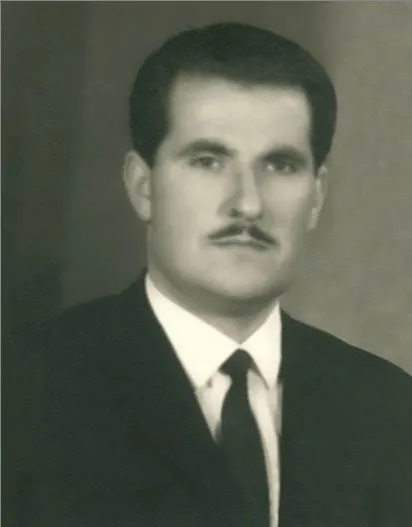
Biography of Nikolaos Moutsakis
Translated from the original Greek.
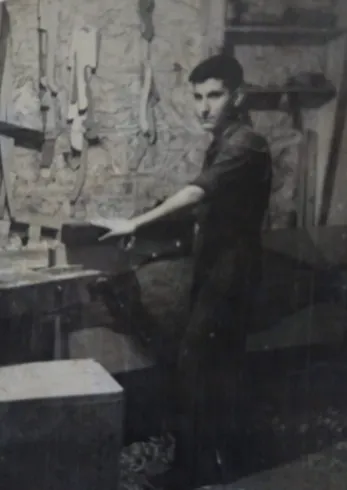
Nikolaos Moutsakis has his roots in Perivolia, Chania, on the island of Crete. He grew up in a family of deep piety, where his parents — people of faith and principle — took care to pass on to him from an early age the ideals of morality, love and devotion. In that atmosphere, faith in God and active love for his fellow human beings took root in his heart. The deepest desire of his heart was to truly know himself: to be able to tell good from evil, and to have the strength always to choose the right path.
The lines that follow present the various stages of his life and the path that led him to the great decision of his life: to stand beside people and support them. Through his own lived struggle and unceasing prayer to God, he sought to help them discover the true joy of life — to become happy, serene and healthy, living in peace and reconciliation with God; to love themselves and their fellow human beings; and to respect and care for the environment in which they live.
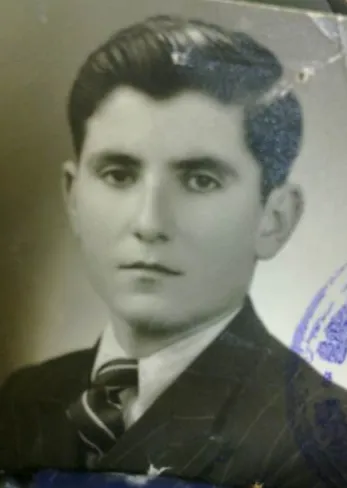
He grew up in hard times, when his father could not feed all the children of the family. Life and time showed him early on that his future would demand strength and determination. From a young age he decided to take his life into his own hands, knowing that only in this way could he come to understand his own self. Along the way he met temptations and hardships, but he learned to remain steadfast, kind and hard-working. “A sound mind in a sound body” became his guide; he learned to think positively, not to let problems bend him, and always to move forward without giving up. Every difficulty was for him an opportunity to grow stronger and to learn to live with truth, faith and a heart open to the people around him.
He knew that he would face many and varied difficulties, and that he would prevail only if he learned to take care of himself. He knew he had to keep the promise he had made to himself: never to let himself go hungry or be neglected. He also understood that every experience, every difficulty, would be a teacher to him, giving him valuable lessons in life.
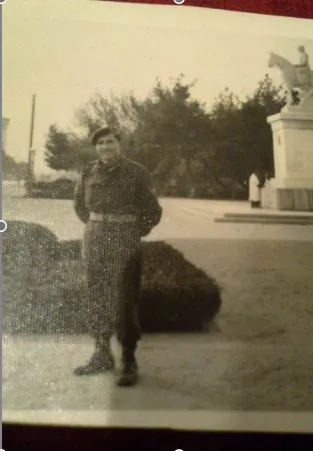
He set out on his journey in 1947, at a young age, heading for Athens. His aim was to find work and at the same time continue his studies, despite the hardships the country was going through in the midst of the Civil War (1946–1949). In the 1950s, now older, he served as a non-commissioned officer in the 3rd Army Corps. When he was discharged, the true great journey of his life began — a journey full of vision, goals, ideals and tireless effort. He knew that to live securely and put a little money aside, he would have to learn the value of thrift and foresight. Many try to succeed in life without knowing what they truly need. He, however, knew that success belongs only to those who have a vision and who strive with faith in God and in themselves. He decided never to give up. He saw the world as a beautiful place where there is no need for anger or hatred; even in darkness there is light, if only you look for it. After completing his service, he returned to his birthplace, Chania. He could not remain indifferent to the misery, malice, hatred and pain that surrounded him. Every day he begged the Heavenly Father to show him the way to find help for himself and, at the same time, to support and relieve his fellow human beings.
On Easter Day 1956, some seventy years ago, after attending the Divine Liturgy at the Church of Agia Paraskevi, he went to his family’s orchard to pray alone. He stayed there for many hours, immersed in prayer. At some point, while praying with great devotion, he entered a state of ecstasy and saw an overwhelming vision. It seemed to him that the whole earth was spread out before him, like an endless forest full of mire and mud. In that mire were people of every age and social class, suffering and struggling to be saved. Anxiously they tried to get out of the mud, but their efforts were in vain. Suddenly, out of that dark landscape, terrible creatures appeared: a crocodile seized and devoured one person, a snake emerged and swallowed another, while a wild beast charged and devoured a third. There were others who, exhausted by the struggle, sank deeper and deeper into the mud until they vanished completely from sight. Countless people passed before him, like an endless procession of misery. All of them were weeping and, in their despair, calling upon God for help and salvation.
“God, Yahweh, Allah, Buddha… help us!”
So the people cried out in their despair. He then noticed that all of them, despite the different names, were addressing the same higher power — the Living God of Love — asking for salvation and for help in their suffering. He felt that people sensed His presence but did not yet know that God is Love, and that He is one for all.
Deeply moved by all he beheld, he suddenly heard a Voice calling him and saying:
“Whom shall I send to all these people to help them?”
Then, without hesitation, he answered spontaneously:
“Here am I; send me.”
And from his heart he promised: “I will try to help them for as long as You will, my God, for as long as You give me strength. I will unite my life with the lives of my fellow human beings, and I will strive to show them that the God they call upon is Love.”
He would try to convince them that a person is called to love God, and also his neighbour as himself. For, as Scripture says, “everyone that loveth is born of God,” and also, “by this shall all know that they are of God, if they have love one to another.”
That is, they must learn to make room within themselves for both the “I” and the “We”. Only in this way will they be able to find the way out of the mire in which they are trapped — the mire of egocentrism, jealousy, malice and hatred; of war, of mental and physical illness, of misery and, finally, of death.
After that vision he remained in his homeland for three more years, working without pause, until one day he heard a voice speaking strongly in his mind: “Come over into Macedonia and help us.” In that call he heard every human plea for help. And so he decided to go to Macedonia, where he arrived on 5 November 1959.
Resolute and fully aware, he said to himself: “I will go to find souls for the Lord, to find the children who will keep me company.” With His help, to found the kingdom of Divine Love and eternal Life. It was a decision that took considerable courage, for as a self-made professional he had already opened three shops, and now he was called to leave all his comforts behind and start again from the beginning. And yet he took it without a trace of fear — a decision one can take only with God’s enlightenment and strength — for he had come to live the words “perfect love casteth out fear.”
He moved to Thessaloniki, having first given away all the property he had built up with great toil. For his personal expenses in his new beginning he had 800 drachmas and a suitcase with the tools of his trade. His first concern on arriving in Thessaloniki was to find work. Within a very short time he found a job at a furniture workshop, as well as a place to live. Through hard work he once again set up his own furniture shops in Thessaloniki. At the same time he continued his unceasing struggle to realise his vision — as his tireless social contribution over seven decades bears witness. In his own words: “To urge people to take an interest in what is happening around them, to learn to move past their problems and keep going. Not to give up, to become invincible through the power of God while remaining humble. To have a living faith, to be reconciled with oneself and with one’s fellow human beings, and to apply an important social rule: whatever you want others to do to you, do the same to them. For people generally to be happy and positive, so that they may live long. To believe and to walk towards the good, so that they may think in freedom.”